
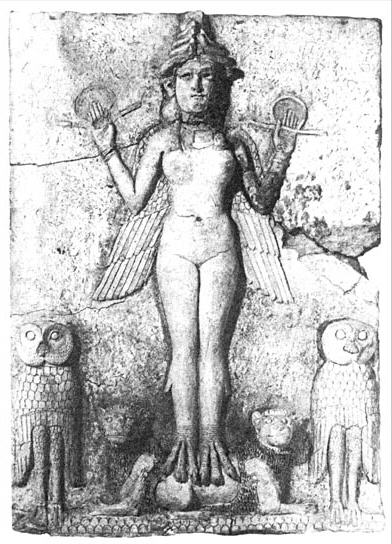
Yesterday afternoon, I said goodbye to Idris, a dear old friend who had passed away at the age of 79. I had not seen him for many years, yet the depth of our connection had never been touched by distance. It was the kind of bond that can only be forged when two people witness one another through many cycles of transformation, and come to know each other’s shadows with the same intimacy as each other’s light.
Idris and I first met in 2000, when we began a spiritual training in Glastonbury that unfolded over several years. Six years later, he took part in a sacred drama I directed based on the Descent of Inanna, the ancient Sumerian myth of the goddess who journeys into the Underworld. Looking back at a rehearsal video yesterday, I was reminded that Idris had played Inanna’s husband, Dumuzi, and of how deeply this myth had touched both our lives.
Descending into the Underworld, and into the darkness it represents, was something Idris and I had both experienced several times in our lives. Our lives were dedicated to transformation, to understanding what it means to be fully human. To feel and experience life in all its many facets, and not turn away from what is dark, difficult, or painful. I believe it was this shared resonance that connected us so deeply at the time.
Idris was a profoundly sensitive, wounded, and idealistic soul who loved life and had many passions. He also struggled with addiction, yet later devoted much of himself to helping homeless people. I, in turn, was working in prisons with sex offenders at the time, seeking to understand what drives men to commit such crimes, and how reconciliation with the feminine could be attained.
Inanna, the Sumerian Goddess of love and war, was a deity we both felt drawn to for this reason. In the myth, she leaves heaven to visit the “Land of No Return”, ruled by her dark sister Ereshkigal. Fully aware of the dangers, she casts caution and comfort to the wind, clothes herself in her finest garments and jewellery, and then begins the journey.
Along the way, she must pass through seven gates. At each one she is forced to surrender a piece of her royal attire, until she is stripped of all her worldly power. Only then, when she is completely naked and defenceless, can she enter the Underworld.
The seven judges of the Underworld, known as the Anunnaki, then pass judgment on Inanna, signifying that in this realm even a great goddess must submit to deeper laws of truth and consequence. Her sister Ereshkigal turns her into a corpse and hangs her lifeless body on a hook, a stark image of total defeat, ego death, and the stripping away of all former identity. There she remains until the god Enki intervenes, creating two humble beings from the dirt beneath his fingernails and sending them with the food and water of life to revive her.
After Inanna’s resurrection, she does not simply walk back unchanged. In many readings of the myth, her return signifies rebirth after initiation. She has passed through humiliation, helplessness, and death, emerging with a deeper knowledge of realities her former power could not shield her from.
She returns to the upper world with greater depth, authority, and an understanding of both light and darkness. Yet the Underworld demands balance, and she cannot leave without consequence, but must eventually provide another in her place. The myth suggests that true transformation always carries a cost: one cannot descend, die to an old self, and then resume life exactly as before. In that sense, Inanna returns as the same goddess, yet inwardly changed.
It also reminds us that transformation does not come through force or status, but through humility, wisdom, and grace after complete surrender.
And what does complete surrender mean in real terms – not only in an ancient myth, but in our own lives?
It means being willing to surrender everything that is dear to you in order to know what is true. To discover who you really are, beyond the masks, beyond the ego, beyond the many trappings that keep you feeling safe. It also means that you might not return from the Underworld as the same person, or, in some cases, not at all.
Transformation, real transformation, asks everything of you.
And that is precisely why so many people avoid it. It is one thing to read self-improvement books, attend courses, take ice baths, or engage in whatever makes you feel better and stronger. It is quite another to surrender your status, reputation, money, relationship, or career. To look honestly at the ways you use those attachments to cover old insecurities and distract yourself from the feelings beneath.
Who are you when all of it is taken away, and you sit naked in the desert?
And the answer to that question – who you are when every last defence has fallen away – is something not many people are prepared to hear. Because it can be uncomfortable, confronting, even devastating. But if you want to be free, truly free, I believe there is no other path.
Of course, this does not mean that we should all take drastic measures, give up our jobs, become homeless, and donate all our possessions to the poor. Though in some cases, such radical surrender has borne remarkable fruit. Saint Francis of Assisi is one obvious example. In our modern lives, however, there are gentler ways of doing this work. It begins with awareness: awareness of what you are doing, and more importantly, why you are doing it.
If people repeatedly disappoint or leave you, it may be worth asking whether your own behaviour has something to do with it. If you keep piling on responsibilities until you have no time left for family or friends, ask yourself why achievement feels so necessary. If you need to feel superior to others in order to feel good, look at what lies beneath that drive. If you only feel secure when you have a lot of money, even if it means staying in a job you hate, investigate the deeper need beneath it. And if you would rather remain in a loveless marriage than be alone, question what it is about solitude that threatens you.
Transformation means dismantling all of your excuses. It means chipping away at the armour until it breaks, until, like Inanna, you stand naked, defenceless, and utterly real before life. For it is beneath those fears and protections that your true, brilliant, radiant essence can be found. Your defences conceal it and dim your light.
This is why we do this work: to find our way back to who we truly are, to the bright spark that was gradually covered over by beliefs, rules, conditioning, and disappointment. To the authentic being within us that is capable of the greatest joy and the deepest sadness, living life fully in the knowledge that light and darkness are forever wedded in the same dance of life.
In loving memory of Idris Charles (1947–2026)
The Descent of Inanna rehearsal video can be watched on YouTube.
Subscribe here to receive future articles directly in your inbox.
If my writing resonates with you and you would like to support it, you can buy me a coffee here:
https://buymeacoffee.com/sriladevi
It helps create the time and space for this work.
naked in the desert… i liked that.
i love your writings!
Thank you, Soma! That means a lot coming from a gifted writer like yourself x