
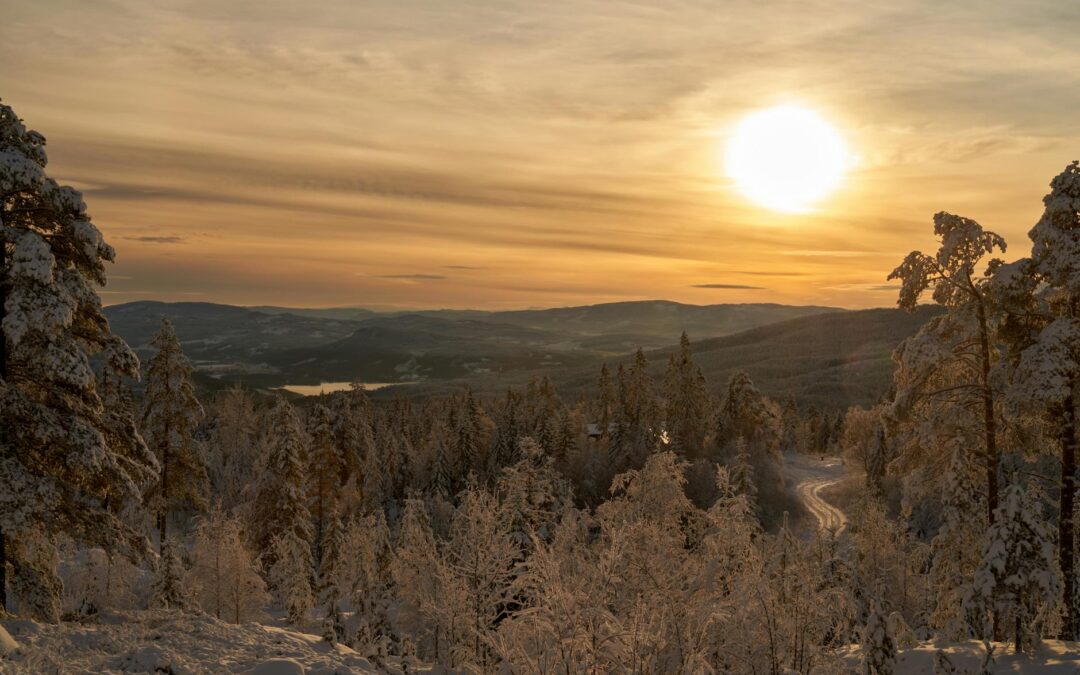
This morning, I came across a beautiful quote on silence by Brother Phap Huu of Plum Village, the retreat centre founded by the Vietnamese monk Thich Nhat Hanh. It felt especially apt for this time of year, with the Winter Solstice, Christmas, and the Twelve Sacred Nights just around the corner. Even though the world seems more frantic than usual, this period has traditionally been a time of introspection, slowing down, and deep listening.
Yet in my own journey, and through my experience as a yoga teacher, I have found that many people feel deeply uncomfortable with silence and stillness.
Brother Phap Huu echoes this observation. He says:
“Silence is very scary if we are not trained in it. And it is scary because we get to see our restlessness. Maybe our anxieties, our depressions, our fears all have a chance to be there. And maybe some of us hearing this will probably be very afraid of that. But there’s something fierce in Zen. It’s like, you have to meet the beast. You have to meet your monsters in order to really learn to embrace and love yourself.
So silence is also a language of love. And noble silence is a distinguished silence — one in which we give ourselves the space to reflect, the space to be alive. It is not repression. It is not about repressing ourselves from speaking or thinking. Rather, noble silence is a silence of presence. And that is where the nobility in noble silence comes from.”
There are so many valuable points in this statement. When we are still – really still – and don’t distract ourselves with busyness, our mobile phones, media, or other people, many things begin to surface: thoughts, fears, regrets, anger, emotions of all kinds.
Perhaps we realise, deep in our hearts, that we are not living the life we truly want, and that our longing for something different has simply been suppressed. Silence brings many things to the surface, and not all of them are comfortable. And once these issues have emerged, we may also find that we have run out of excuses.
Often, people say to me: “I would love to meditate, but as soon as I sit down and close my eyes, I am overwhelmed by the many thoughts that rush in. I get anxious and stressed instead of peaceful.”
To which I respond: “That’s normal. Peace only comes when we have sat with our thoughts and discomfort, and no longer push them away. That’s why meditation is called a practice.”
Yes, silence is actually really difficult. But it is also incredibly rewarding. That is why spiritual practitioners traditionally spend at least some time each year in silent retreat: to reconnect with themselves, to hear the quiet voice of intuition, to press the reset button. To feel into what is true. And to emerge refreshed and renewed.
And there is something deeper, too. Meditation makes us aware. It becomes a mirror in which we can see ourselves as we actually are, and not as we would like to be. Gradually, we learn to accept ourselves, with all our flaws, vulnerabilities, and contradictions. Our hearts open and become wider; our inner worlds more spacious. There is no longer a clear “right” and “wrong,” an “either” or “or.” Instead, it becomes “and.” We begin to understand and appreciate life’s complexities and the stories of others, and superficialities no longer satisfy us. We start to see more deeply, and to go to the root.
And perhaps most liberatingly, we no longer need an answer to everything. We learn to accept life as it is, to flow with its mystery rather than rushing the river or forcing outcomes our egos would like to see. When we accept that we often do not know what is best for us – and that there may be a greater intelligence that does – life becomes much easier.
This does not mean accepting injustice or remaining passive when action is required. But action then comes from a very different place: deeper, quieter, more attuned. Our actions are no longer driven by ego, because our own motivations become clear to us very quickly. And when we see what truly motivates us, there is often no longer a reason to act at all – but to address the underlying need instead.
And, as Brother Phap Huu says, silence is also a language of love. Words so often obscure or distort what we truly feel and mean. How can something as deep as love – especially spiritual love – ever be adequately described? This is why, when mystics attain a vision of the Beloved, or when a yogi enters samadhi, they remain silent. There are no words that can describe the indescribable, and the greatest spiritual teachings are often transmitted in silence.
Perhaps we can remember this as the year draws to a close: to take moments of stillness, solitude, and silence to reconnect with who we truly are, what our purpose is, and what our hearts are telling us. Because only when we are silent can we truly listen.
You might also enjoy my earlier article about a 40-day silent retreat in the Himalayas
If you’d like to receive future articles and reflections directly in your inbox, you can subscribe here.